
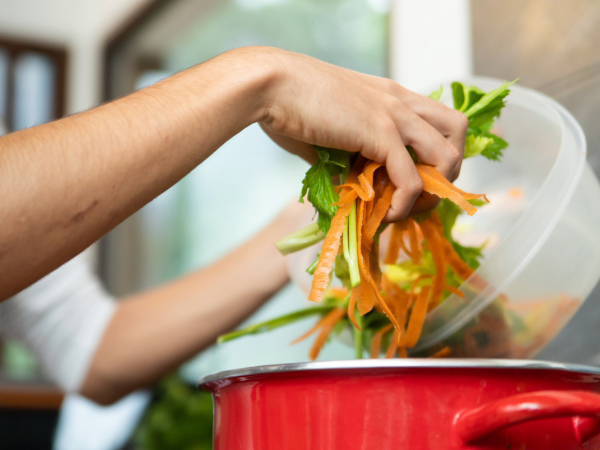
Whether preparing a favorite meal or trying a new recipe, your taste buds get excited as you begin to rinse, peel, chop, and mince the ingredients. As waste piles up near the cutting board, you may consider this a necessary byproduct of eating a fresh, healthy diet. But is it? What if someone could show you how to create flavorful dishes from those scraps?
That is what Lindsay-Jean Hard does in her book, Cooking With Scraps: Turn Your Peels, Cores, Rinds, and Stems Into Delicious Meals (Workman Publishing, 217 pages). Her recipes show you how to turn this untapped resource into food you will love. From refrigerator-clearing frittatas to exotics like beet-peel margaritas, the book helps you make the most of the food you have always purchased but never fully enjoyed. While clever and elegant, these recipes are also quite simple, with neither the ingredient list nor the steps exceeding 10.
A Conversation With Lindsay-Jean Hard
In the introduction, you credit several cooks and authors for creating timeless and popular recipes. Was there someone in your childhood who inspired your love of cooking?
I attribute this to my father’s parents, Jane and Gil (G.G. and Pop-Pop to me). Their appetite for fine dining gave me early lessons in proper table etiquette and an appreciation of good food. While I ate my fair share of cheeseburgers, I also experienced new dishes. I clearly remember greedily slurping the garlicky butter that my escargot were swimming in and devouring crispy black bean cakes while gazing, mesmerized, at an ice sculpture of a swan across the room. My grandmother had a degree in dietetics, but I don’t remember any heavy-handed discussions on food choices or exercise — she and my grandfather led by example. They were active, trim, and traveled extensively. There were no “health foods” or fat-free dairy products lurking in the refrigerator. I knew I would always eat well when I was with them — like G.G.’s Banana Cake that the Banana Peel Cake in my book is modeled after. They set an early example for me on the value of enjoying all things in moderation.
The influence of your two years living in Japan is evidenced in your tempura, soba noodles, and grilled rice dishes. In what other ways have your travels informed your cooking style?
I find that I grow the most when I’m out of my comfort zone. Whether exploring a new spot in my own town or traveling to new places, I try to stay in the moment and take it all in. I never know how that experience might inspire me — by testing out a new dish in the kitchen, heading to my art studio to create, or grabbing a pen and paper to write about it.
This book evolved from your years of writing and editing a food blog. Do you plan any additional cookbooks? Any other projects evolving from your current work in the retail food business?
That’s a good question! I’m mulling over a few ideas, but I don’t have anything to announce on the writing front. Cooking With Scraps has definitely impacted Zingerman’s Bakehouse, where I work as a marketer. While they were already focused on reducing waste, I’ve helped in that area. For instance, we no longer peel much produce, like apples and carrots!
Images credit: MarsBars | iStock | Getty Images Plus